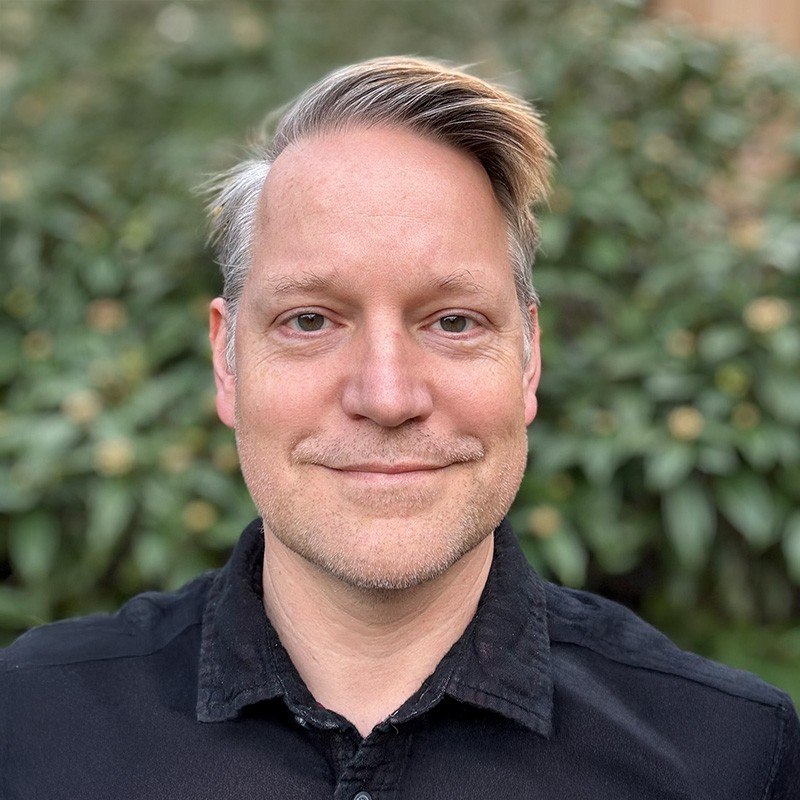
About Obaron
I'm Adam Kinney. I've spent twenty-five years finding what has rules, building the system that runs it, and handing the humans back their best hours — Microsoft Learn, Stripe Docs, the work in between.
AI shortened the distance between seeing the pattern and installing a useful workflow. That means a solo studio can now afford a system that used to need a budget and a team. The tools are good enough for rule-bound work — drafting, sorting, formatting, routing, follow-up. What's missing is the install — someone who wires AI into the work a business actually does every week, and stays by it while it runs.
That's the company.
An AI automation practice for small businesses and founder-led companies. Concierge installs first. Scanner and training built from what I learn there.
Three arms, one through-line:
- Practice — concierge installs, hands-on with every partner. I wire the dull work into tools you already use, with an approval queue in front of anything customer-facing.
- Scanner — self-serve tools built from what the practice teaches me. Image Check + Fix is in internal preview; more Checks are in build and design.
- Academy — training is in design for operators and developers who want to install this themselves.
The dogfood principle
I run the automation on Obaron first.
Before I wire anything for a customer, it runs in my own shop. The inbox triage, the content pipeline, the approval queue — built and trusted on myself before I offer them to anyone else. That's not marketing. It's the discipline that keeps me honest.
Every week something shifts. Another workflow turns out to be more rule-bound than I'd thought. Another check gets built so the output stays true to what I actually asked for. A place I have to take back because the judgment was more human than I'd mapped. I don't have the whole map. I have the part I've walked.
The dull / amazing distinction
Every install starts with the same question: what's the dull work, and what's the amazing work?
The dull work has rules and patterns (drafting, sorting, scheduling) — AI is genuinely good at it.
The amazing work requires the owner's history, taste, and read of a specific room. AI clears the path back to it.
That's not a consolation. That's the whole point.
The approval queue is the point
AI drafts. You decide what ships.
This isn't a concession to anxiety. It's the right architecture. The person in the room with your customer should be a human. That's not changing.
Why I built Obaron now
Big tech is shipping AI to small business — Anthropic launched Claude for Small Business. That's good for the industry and good for the customer.
What's missing is the install. They don't settle into the week of a kids' activity studio or a solo writer. They don't ratify a small business's voice. They don't run the approval queue. They don't stand by it on a weekly review.
I do.
Per-install handcraft is the method
A few partners at a time today. The practice grows with the work — more partners when the team grows, never at the cost of per-install handcraft.
The quality of the install depends on knowing what a business actually does every week. You can't get that from a template, and you can't get it from a thousand-customer funnel. The discipline is what's permanent. The volume isn't.
What I don't do
- Sell methodology I haven't installed on myself.
- Promise transformation. I promise specific workflows that run.
- Build a thousand-customer funnel.
- Pretend the training is ready before it is.
- Automate the moments that matter. Those belong to you.
Current state
- Practice is taking on a few partners at a time. First partner install is underway.
- Scanner is in build. Image Check + Fix is in internal preview on Obaron's own surfaces.
- Academy is in design. Waitlist is open.
If this sounds like the work sitting inside your business, book a discovery call. If it doesn't, I'll tell you that too.
Get in touch
Email hi@obaron.ai.
I write about AI strategy and automation at adamkinney.com.